
Is The XRP Vs. SWIFT War Already Over, Or Are Banks Taking Another Route?
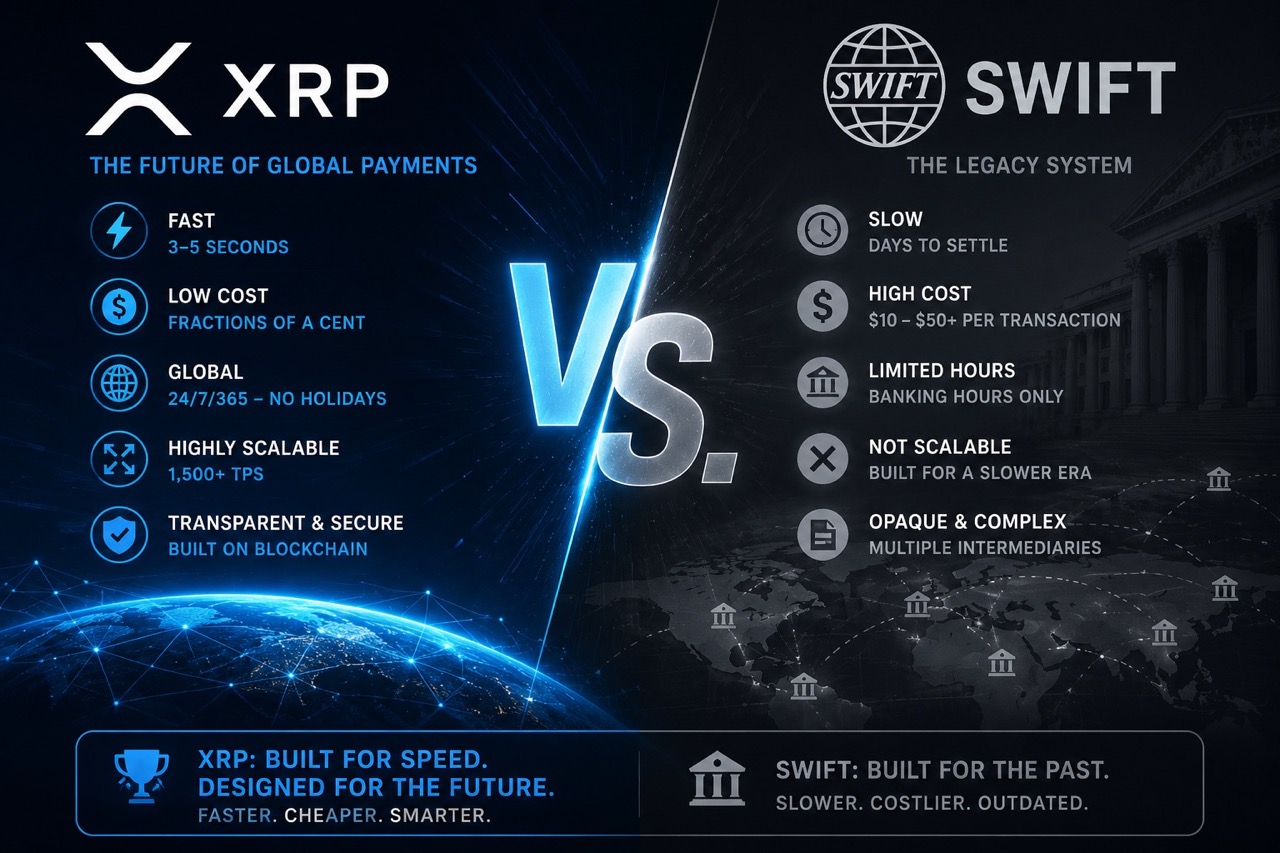


XRP and SWIFT are often presented as rivals in the race to modernize global payments, but a recent argument suggests otherwise. Rather than a winner-takes-all battle, the latest developments point toward a financial environment where traditional banking infrastructure and blockchain-based settlement systems operate side by side. That perspective raises an important question: is the long-running XRP versus SWIFT debate already outdated, or are banks quietly building a different model altogether?
XRP VS SWIFT: The Wrong Battlefield
To understand the argument, it is necessary to separate messaging from settlement. According to James Dula, much of the discussion surrounding SWIFT’s latest cross-border payments initiative misses a crucial distinction. While the network recently rolled out a single framework with over 50 banks, offering faster processing and better transaction tracking, its core function remains unchanged.
SWIFT functions as a communication layer between financial institutions. It transmits payment instructions, confirms transaction details, and coordinates activity across borders. However, sending a message is not the same as moving money. The actual transfer of value still requires a settlement mechanism capable of completing the transaction.
This distinction is why Dula argues that the latest announcement does not automatically place SWIFT in direct competition with XRP. In his view, the real challengers emerging from the blockchain sector are interoperability and messaging protocols such as Axelar, LayerZero, Wormhole, and Chainlink. These networks focus on transporting information and coordinating activity between systems, making them closer competitors to SWIFT’s communications role than XRP itself.
Viewed through that lens, the debate changes dramatically. Instead of asking whether SWIFT can replace XRP, the more relevant question becomes whether messaging networks and settlement assets should even be competing for the same position within the financial stack.
Banks Are Building Both Routes
That shift in perspective becomes even more significant when examining the institutions involved. Dula highlights that many of the banks participating in SWIFT’s new framework already maintain relationships with Ripple or have explored blockchain-based payment solutions linked to its ecosystem.
Major global names such as JPMorgan, HSBC, Deutsche Bank, Standard Chartered, and Santander have all been associated with digital asset research, blockchain experimentation, or payment modernization efforts. Their involvement on multiple fronts suggests that financial institutions are not necessarily choosing one system while abandoning another.
Instead, banks appear increasingly interested in combining technologies that solve different problems. A messaging network can coordinate transactions, provide compliance information, and create standardized communication channels. A separate settlement layer can then handle the movement of value with greater speed and efficiency.
This emerging model challenges the idea of a direct war between XRP and SWIFT. Rather than replacing one another, both could occupy different positions within a broader financial architecture.
The implication is clear. If Dula’s assessment is correct, the future of international payments may not be defined by a single victor. Instead, banks may be constructing a hybrid network where traditional infrastructure and digital asset technology work together, creating an entirely different route than many observers expected.

Featured image created with Dall.E, chart from Tradingview.com

Editorial Process for bitcoinist is centered on delivering thoroughly researched, accurate, and unbiased content. We uphold strict sourcing standards, and each page undergoes diligent review by our team of top technology experts and seasoned editors. This process ensures the integrity, relevance, and value of our content for our readers.



